What Is Hyaluronic Acid? A Guide To This Moisturizing Ingredient
Chances are you’ve heard of hyaluronic acid if you’ve ever scrolled through a beauty blog or skimmed the pages of a women's magazine. Hyaluronic acid is a powerful hydrator widely used in skincare products and beloved by dermatologists. Its special power: it pulls moisture from the environment into your skin for deep hydration.
While this may sound like magic, this extra-special ability comes thanks to basic chemistry. Read on to get the science behind hyaluronic acid, including what it is, who should be using it, and how to use hyaluronic acid the right way.
What Is Hyaluronic Acid?
Hyaluronic acid is found naturally in the body as a polysaccharide (a group of sugar molecules bonded together). It’s a humectant, meaning it acts as a magnet for moisture, pulling water from the environment and binding it to collagen so it’s trapped within the skin. Hyaluronic acid is very good at its job, holding up to 1000 times its weight in water. It not only hydrates, it pulls in extra moisture, plumping cells with water and holding it there.
Unfortunately, those cells don’t stay plump and moisturized forever. We can lose water through cracks in the skin’s moisture barrier (the natural layer of cells and lipids that protects the skin), causing the skin to become dehydrated, dull, and irritated. Our bodies also make less hyaluronic acid as we get older, which is one of the reasons our skin becomes drier as we age.
What Does Hyaluronic Acid Do In Skincare Products?
Fortunately, hyaluronic acid penetrates the skin easily, making it a powerfully effective moisturizer when applied topically. Using it in skincare ensures that it’s delivered directly where it's needed to replenish and hold cell moisture.
In layman’s terms: hyaluronic acid hydrates skin and makes it smoother, firmer, plumper, softer, and more radiant. More hydrated skin also means wrinkles and fine lines appear softened. Think of it as science’s answer to an Instagram filter - it blurs those hard edges to make you look dewy and refreshed.
Now for the cool, science-y part: hyaluronic acid doesn’t just pull in moisture from your skincare products, it draws in water from the environment to help maintain hydration. So when you apply it to a damp face, it actually pulls that water into your skin and binds to it.
Not All Hyaluronic Acid is Created Equal
Your skin’s primary function is to serve as a barrier between your body and the environment. It works like a bouncer at an exclusive club, only allowing certain molecules inside. And even then, only the VIP’s get to the deepest levels of the epidermis.
Hyaluronic acid comes in multiple weights – “molecular weight” is science speak for “molecule size.” Your skin doesn’t let all molecular weights to absorb into the skin, which is where multi-weight hyaluronic acid comes in.
Healthy skin is optimally hydrated at every level. While low-weight hyaluronic acid absorbs deeply, high-weight hyaluronic acid’s larger molecule size enables it to attract more water at the skin’s uppermost layers.
Who should be using it?
Just about anyone can use hyaluronic acid, and it’s suitable for even sensitive skin. It’s especially good when your skin’s moisture barrier becomes compromised and your skin is dehydrated.
How do you know when this happens? Think about the way your skin looks after a long flight. It’s dull and maybe even a little itchy. You may also notice some fine lines that weren’t there when you took off. That’s dehydrated skin. Hyaluronic acid is the perfect antidote, replenishing skin with moisture to plump, soften, and soothe.
It’s also a great ingredient to incorporate as you get older and your skin gets drier. Not only will it help replenish and retain moisture, it can improve the appearance of fine lines and wrinkles as well. It’s also a team player that works well in conjunction with other beneficial skincare actives, such as Vitamin C and retinoids.
Is Hyaluronic Acid Good For Acne?
While hyaluronic acid won’t help clear your acne, it can be beneficial for acneic skin. As a non-greasy hydrator, it can help restore and maintain your skin’s moisture barrier after it's been exposed to drying acne treatments while soothing redness and plumping acne scars.
Some research also suggests that it can promote more balanced sebum production by helping maintain healthy moisture levels.
Squalane vs. Hyaluronic Acid
When comparing squalane vs. hyaluronic acid, the two ingredients function in fundamentally different ways.
Hyaluronic acid needs to sit on the top layer of your skin to hold moisture in so it doesn’t evaporate. When you see it listed as an ingredient in a moisturizer, that product also includes an emollient to lubricate the skin and lipids to hold oils into the skin, helping to lock in that moisture.
Squalane, on the other hand, seals in moisture all by itself. This makes the two ingredients a great combination. Both work to plump and hydrate, while squalane drives hyaluronic acid deeper into the skin, then seals in moisture so it can’t escape.
How To Use Hyaluronic Acid
Hyaluronic acid is truly a use-and-go product, as you don’t have to worry about it causing sun sensitivity or causing adverse reactions when combined with additional active ingredients. But there are a few tips and tricks you can employ to get more out of your products.
Here’s how to use hyaluronic acid to reap the most benefit:
- Use it morning and night.
- Make sure your skin is still a little damp before using it. The hyaluronic acid will grab the water molecules sitting on your face and pull them into your skin, increasing its moisture levels and amplifying its plumping effect.
- If you’re using a hyaluronic acid serum, lock it in with a moisturizer so water molecules don’t evaporate from your skin over time.
Which Biossance Products Include Hyaluronic Acid?
Hyaluronic acid has a salt counterpart called “sodium hyaluronate,” which is what we use in our hyaluronic acid formulas. Sodium hyaluronate is more stable and less likely to oxidize, so it will remain effective even after your jar of serum has been open for a while. It also has a smaller molecule size, enabling it to penetrate the skin more deeply.
If you’re interested in trying a hyaluronic acid product, we recommend the following Biossance formulas:
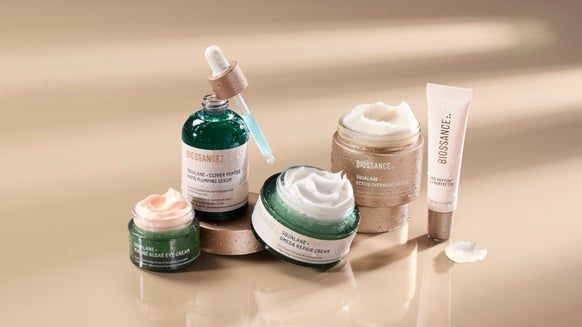
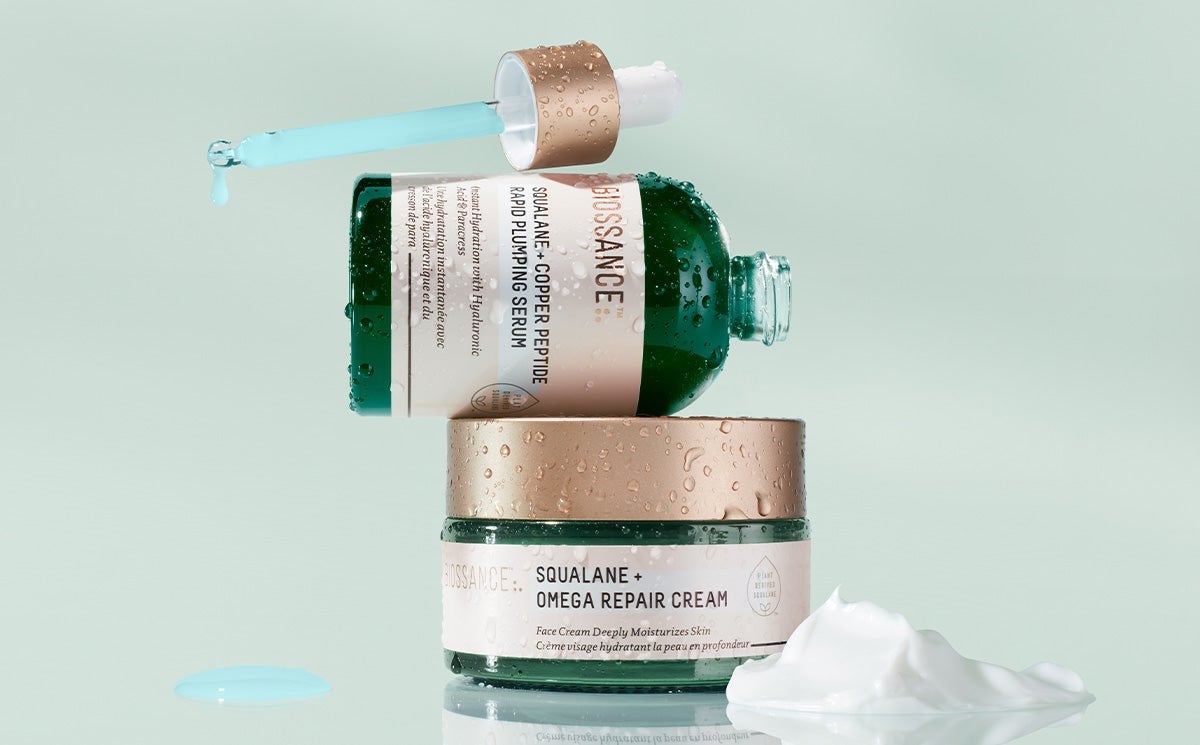
Squalane + Copper Peptide Rapid Plumping Serum - A powerful hydrating serum that delivers instant hydration alongside a visible plumping effect using science-backed hydrators, including multi-hyaluronic acid, ectoin, and polyglutamic acid. Shop now Squalane + Omega Repair Cream - A rich and decadent moisturizing cream with a luxe, whipped texture. Our multi-lipid formula deeply moisturizes and powerfully hydrates with multi-hyaluronic acid to improve the look of fine lines and wrinkles while supporting the skin’s moisture barrier. Shop now Squalane + Hyaluronic Facial Mist - This luxurious facial mist hydrates and plumps fine lines using two types of hyaluronic acid. Use it immediately after cleansing, as a mid-day hydrating pick-me-up, or to set your makeup. Shop now

$68.00

$60.00

$32.00

As a lifestyle writer and journalist, I love sharing my passion for ocean conservation and obsession with clean beauty. I’ve tried almost every trend and ingredient, and Biossance’s science-backed formulas are the only ones that consistently calm my reactive skin and make it smoother, clearer, and healthier. I’m so excited to be on this journey of skincare innovation with Biossance, and to share it with you!